After graduation, the Post Study Work Visa gives degree holders up to 3 years of open work rights, and from November 2026 a new Short term Graduate Work Visa adds a 6 month option for graduates who don't qualify for the longer visa.
Why Study in New Zealand? (Cost, Rankings, Career ROI)
New Zealand offers a British style education system at meaningfully lower tuition than the UK, US, or Australia, combined with a genuinely high quality of life and one of the safest environments for international students anywhere.
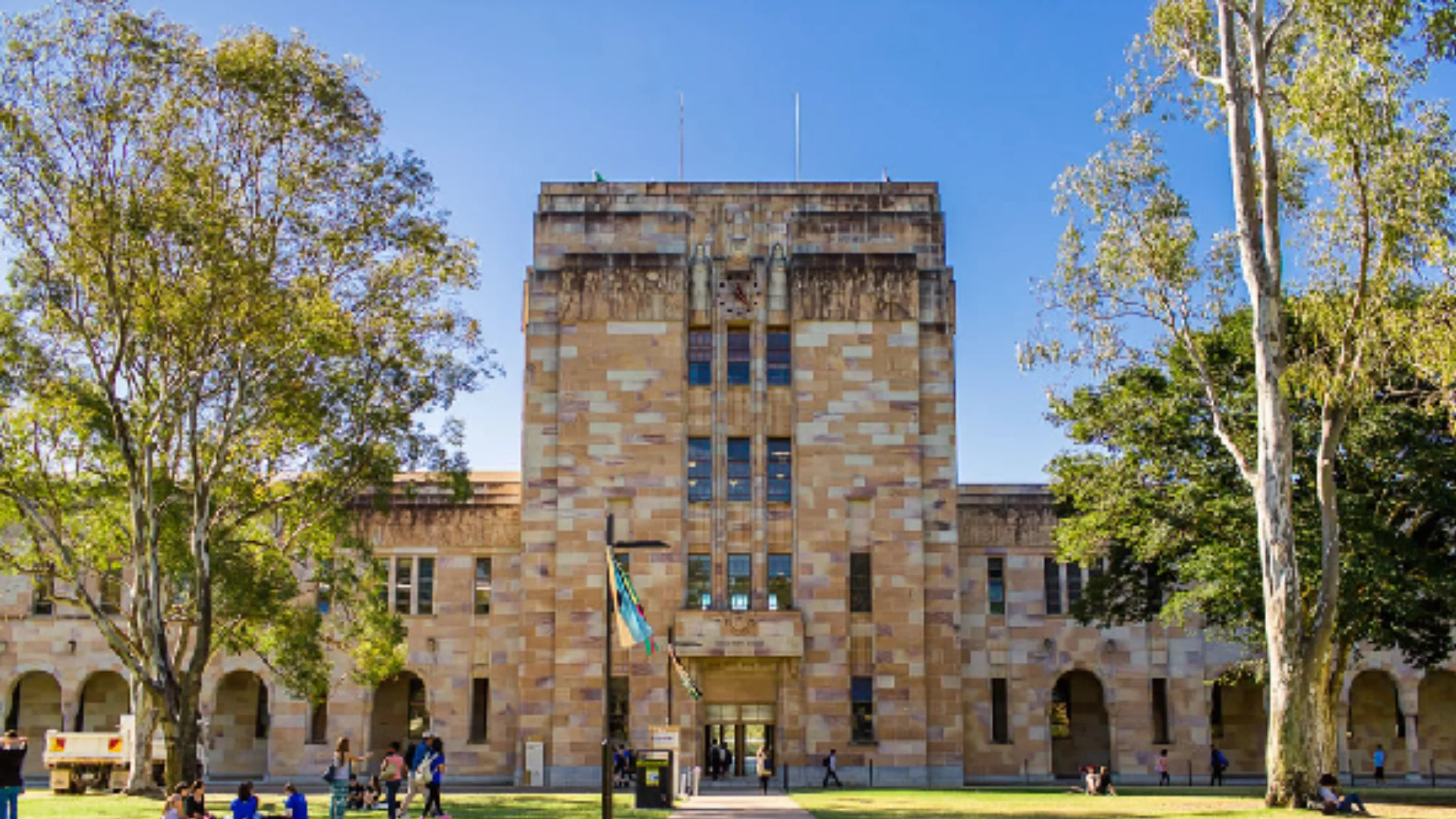
The University of Auckland sits among the world's top 100 universities, and all eight of the country's universities appear in global rankings, an unusually strong showing for such a small higher education system.
The standout advantage is post study flexibility: a 3 year open work visa for degree holders with no employer sponsorship required, plus a 2026 update to the Skilled Migrant Category that shortens the work experience needed for residency from three years to two.
What Are the Best Universities in New Zealand for International Students?
New Zealand has eight universities, all publicly funded and all internationally ranked:
- University of Auckland - the country's top ranked university, strong across business, engineering, and health sciences
- University of Otago - New Zealand's oldest university, known for medicine, dentistry, and pharmacy
- Victoria University of Wellington - strong in law, public policy, and the humanities, based in the capital
- University of Canterbury - engineering and forestry, based in Christchurch
- Massey University - veterinary science and agriculture, with a genuinely national footprint across campuses
- University of Waikato - computer science and management, known for a flexible paper by paper fee structure
Auckland and Wellington carry the highest living costs of the main study cities, while Christchurch, Dunedin, and Hamilton offer a noticeably cheaper alternative without a meaningful drop in academic quality.
How Much Does It Cost to Study in New Zealand in 2026?
Budget NZD 22,000 to 45,000 a year in tuition for most Bachelor's and Master's programs, with specialised fields like engineering, medicine, and healthcare reaching NZD 65,000 or more. On top of tuition, the student visa requires proof of NZD 20,000 a year in living costs, plus mandatory health insurance and return travel funds.
Is a New Zealand Degree Worth the Cost? (Tuition Breakdown by Course Type)
New Zealand universities charge on a paper by paper basis rather than a single flat tuition figure, so your actual cost depends heavily on your specific course load:
- Undergraduate (Bachelor's): typically NZD 25,000 to 45,000 a year, with medicine and veterinary science well above that range
- Postgraduate Taught (Master's): typically NZD 20,000 to 45,000 a year, with a growing number of one year Master's options that reduce total program cost
- PhD (Doctoral): notably cheaper than other levels. International PhD students who remain resident in New Zealand for the duration of their study can qualify for domestic tuition rates, often as low as NZD 7,500 to 8,000 a year, alongside research stipends that can reach NZD 25,000 a year
- Diploma and certificate programs: generally the most affordable entry point, often used as a pathway into a full degree
The PhD domestic fee arrangement is one of New Zealand's most underused advantages. Very few other major study destinations offer international doctoral candidates the same tuition rate as local students.
What Are the Admission Requirements for New Zealand Universities?
Requirements vary by level and institution, but generally include:
- Secondary school qualifications equivalent to New Zealand's NCEA Level 3, or a recognised foundation program for students who don't meet this directly
- A relevant Bachelor's degree with a strong academic record for Master's applicants
- Proof of English proficiency: IELTS, PTE, or TOEFL
- An Offer of Place from an NZQA approved institution, which is mandatory before you can apply for your student visa
- Academic transcripts, a personal statement, and references for competitive graduate programs
Which Entrance Exams Are Required? (IELTS, PTE, TOEFL)
English proficiency is the near universal requirement, with most programs asking for an IELTS score between 6.0 and 6.5 depending on study level, or a PTE Academic score of around 42 and above. TOEFL is also widely accepted.
Standardised graduate tests like the GRE or GMAT are rarely required outside a small number of specialised business or research programs, making New Zealand's admissions process comparatively straightforward next to the US or UK.
How Do I Apply for a New Zealand Student Visa?
The Fee Paying Student Visa process runs through these stages:
- Receive your Offer of Place from an NZQA approved education provider, confirming course name, duration, start date, and annual tuition
- Pay or arrange your tuition fees. You must show you've paid for one year or one course, whichever is shorter, or use the Approval in Principle option if applying from outside New Zealand
- Gather your proof of funds - NZD 20,000 a year in living costs, on top of tuition and return travel
- Purchase approved health and travel insurance covering your full visa period
- Complete a medical exam and chest X-ray if your course runs longer than 12 months, plus a police clearance certificate
- Apply online through the Immigration New Zealand portal and await your decision
How Long Does the New Zealand Student Visa Process Take?
Processing times vary by provider type. Applications for universities and Private Training Establishments average around 5 weeks, with 80% of applications completed within 7.5 to 8 weeks. Given peak season volumes between October and March, it's advisable to apply at least 3 months before your course starts.
What Are the Financial Requirements for a New Zealand Student Visa?
New Zealand sets a fixed annual living cost threshold, applied consistently regardless of city:
- Living costs: NZD 20,000 per year for tertiary level study, or NZD 1,667 per month for courses under one year
- Tuition fees: proof of payment for at least one year or one course, whichever is shorter
Acceptable evidence: bank statements showing funds held for at least 3 months, an education loan sanction letter, sponsor documentation with a signed Financial Undertaking form, or scholarship confirmation.
Funds Transfer Scheme (FTS): available for students from China, India, Nepal, the Philippines, Sri Lanka, and Vietnam, allowing living cost funds to be transferred securely through an approved bank and released in monthly instalments after arrival.
Note that projected part time work income cannot be used to meet this NZD 20,000 requirement. Immigration New Zealand also scrutinises the source and history of funds closely, and sudden, unexplained deposits are a common trigger for delays or refusal.
New Zealand Student Visa Documents Checklist
- Valid passport
- Offer of Place from an NZQA-approved provider (course, dates, fees)
- Proof of tuition payment for at least one year or the full course if shorter — or Approval in Principle pathway if applying from offshore
- NZD 20,000/year living funds (or FTS transfer if you use the Funds Transfer Scheme for eligible countries)
- Medical and chest X-ray if course >12 months
- Police certificates when required
- Health and travel insurance for the full visa period
- Passport-style photos and completed online application
Offer details must match your financial proof line-for-line.
Common New Zealand Student Visa Refusal Reasons
- Funds: balance or sponsor income cannot support NZD 20,000 + tuition; sudden deposits
- Genuine intent: course unrelated to prior study without a credible story
- Health or character issues
- Insurance gaps or tuition not paid as stated on the Offer of Place
What Are the Best Courses to Study in New Zealand?
New Zealand holds particular strength in:
- Agriculture and Veterinary Science - reflecting the country's genuine agricultural economy
- Environmental Science and Marine Biology - supported by New Zealand's unique geography and research focus
- Computer Science and Engineering - with growing tech sectors in Auckland and Wellington
- Business and Tourism Management - tied closely to New Zealand's major service industries
- Education - with strong teacher training pathways and international recognition
Fields tied to New Zealand's Green List of in demand occupations tend to offer smoother work visa and, eventually, residency pathways after graduation.
Can I Work While Studying in New Zealand?
Yes. As of the current rules, student visa holders can work up to 25 hours a week during term time, and full time during scheduled holidays. Postgraduate research students, meaning Master's by research and PhD candidates, have no weekly work hour restriction at all.
This part time income can meaningfully offset daily living costs, though it cannot be counted toward the NZD 20,000 visa funding requirement.
What Is the Post Study Work Visa?
After an eligible qualification, the Post Study Work Visa is an open work visa — any employer, any role, anywhere in New Zealand, no job offer required first.
Duration
| Qualification | Typical visa length |
|---|---|
| Level 7+ degree (Bachelor, PG Dip, Master’s, PhD) studied ≥30 weeks in NZ | Up to 3 years |
| Approved non-degree (levels 4–7 on the eligible list) | Usually matches study length (cap applies) |
You can hold only one Post Study Work Visa in your lifetime — time it after your longest qualifying programme.
2026 pathway updates (verify on INZ before you apply)
- 16 November 2026: Graduates with a Level 7 Graduate Diploma who already hold a bachelor’s degree anywhere may qualify for a PSWV up to one year
- Short-term Graduate Work Visa (from Nov 2026): 6 months open work if you do not qualify for the full PSWV — bridge to an Accredited Employer Work Visa
- Skilled Migrant Category (from Aug 2026): skilled work experience toward residency may drop from 3 years to 2 for many graduates — a 3-year PSWV now covers the full residency runway more comfortably
Application tips
- Apply before your Student visa expires (onshore) or within the window stated on INZ
- Hold completion documents from your provider
- Meet English requirements at PSWV stage — do not assume your enrolment IELTS still qualifies
- Plan Green List occupations if residency is the goal — see NZ hub
Compare with Australia Subclass 485 when choosing Oceania.
What Is the Cost of Living for Students in New Zealand?
Budget varies by city. A rough weekly range:
| Category | Typical Cost |
|---|---|
| Accommodation (shared house) | NZD 140 to 300 |
| University halls of residence | NZD 180 to 700 (often includes meals) |
| Groceries | NZD 80 to 120 |
| Transport | up to NZD 37 |
| Entertainment | around NZD 55 |
| Utilities and wifi (shared flat) | NZD 90 to 150 a month combined |
Auckland and Wellington sit well above this range on rent in particular, while Christchurch, Dunedin, and Hamilton offer meaningfully lower costs for a comparable standard of living.
Do I Need to Learn Any Other Language?
No. New Zealand universities teach in English, and there's no second language requirement for admission or the visa. Your main hurdle is simply meeting your program's English proficiency threshold through IELTS, PTE, or TOEFL.
What Scholarships Are Available for International Students?
New Zealand scholarships index — national awards first, then university merit pages.
| Scholarship | Type | Best for | Full guide |
|---|---|---|---|
| Manaaki New Zealand | Government, fully funded | Eligible developing countries | Full support package |
| Commonwealth scholarships | Government | Commonwealth citizens | Postgraduate study |
| University merit awards | University | All eight universities | Partial to full tuition |
Research candidates should also ask providers about doctoral stipends and assistantships on the department page — many are not branded as standalone national scholarships.
Related: Post Study Work Visa, find scholarships.
When Should I Apply? (Intake Deadlines)
New Zealand runs two main intakes at most universities:
- Semester 1 (starts late February) - the primary intake, with peak visa application volume from October to March
- Semester 2 (starts July) - a genuine secondary intake, widely available across most programs
Given visa processing timelines, medical exams, and police clearance requirements that can take 4 to 8 weeks on their own, start your application at least 6 to 9 months before your target intake.
FAQs About Studying in New Zealand
Can I study in New Zealand without IELTS?
Yes. PTE Academic and TOEFL are both widely accepted alternatives, and some institutions accept other approved English tests depending on the program.
Is New Zealand cheaper than Australia or the UK for international students?
Generally yes on tuition, particularly for PhD study, where international candidates resident in New Zealand can pay domestic rates. Living costs in Auckland and Wellington are broadly comparable to Australia's major cities, while smaller New Zealand cities are noticeably cheaper.
What GPA do I need for New Zealand universities?
There's no single national cutoff. Competitive programs at the University of Auckland or Otago generally expect a strong academic record, with medicine, dentistry, and pharmacy programs at Otago being especially selective given limited places.
Can I get residency in New Zealand after studying?
Yes, though it isn't automatic. Graduates typically move from the Post Study Work Visa into skilled employment, then apply through the Skilled Migrant Category. The 2026 reforms reduce the required work experience from three years to two for most applicants, meaningfully shortening the overall timeline.
Do all New Zealand universities charge the same tuition to international students?
No. Tuition is set on a paper by paper basis and varies by university, subject, and course load, so two students in the same degree can end up with different total costs depending on their exact paper selection.
Sources
Immigration New Zealand student visa and Post Study Work Visa guidance, 2026 fee schedules from the University of Auckland, University of Canterbury, and University of Waikato, and official 2026 announcements on the Short term Graduate Work Visa and Skilled Migrant Category changes.
Get personalized study abroad advice
Chat with our AI advisor about this destination guide - tailored to your profile.
Start conversation